Look At You
Eyal Cohen
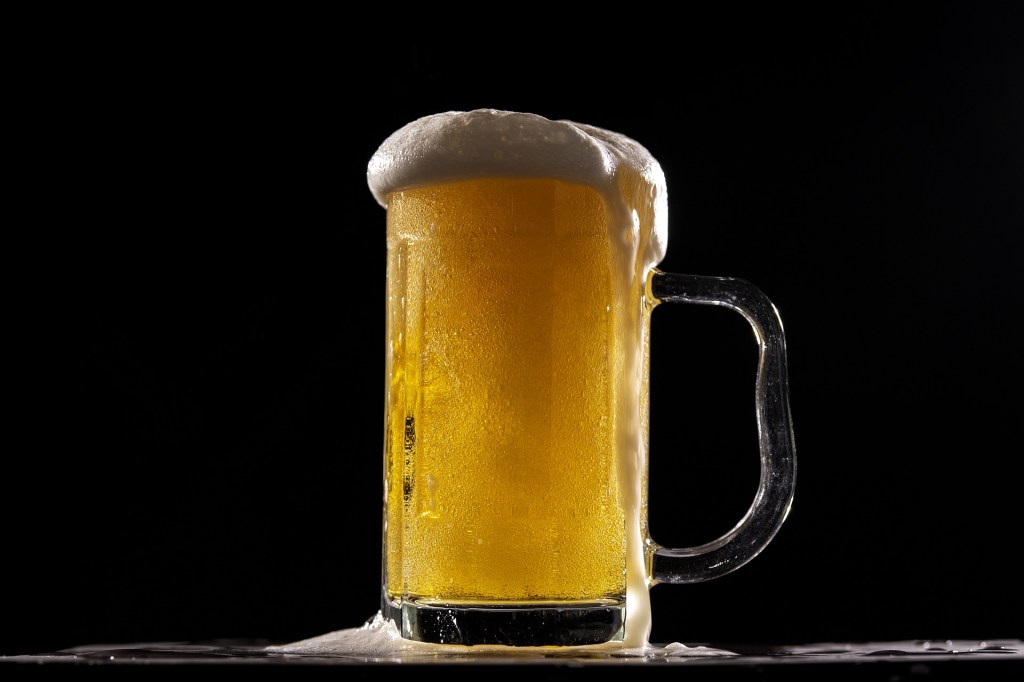
You’re not sure what made you get out of bed and walk downstairs to buy a six-pack of beer. The fact that you’re by yourself at 9:30 PM on a Friday night, which happens to be Valentine’s Day, could provide a logical explanation.
You think you’ve seen it in a movie. You’re actually certain you’ve seen it in a movie. A grad student in his mid-20s, sitting at a desk in his NYC apartment, drinking craft beer out of brown bottles, typing away at a keyboard. It’s almost a cliché—definitely a cliché. You feel like there’s some sort of unwarranted antagonism against clichés. You wonder whether being anti-cliché has become so cliché that it’s more cliché than being cliché. You’re not sure what the answer is but you think you’ll enjoy sitting and sipping and typing, so you go and buy a six-pack of beer.
Alexa tells you it’s twenty-nine degrees out, which would have been great had you still been living in your hometown in Israel, where Celsius reigns supreme. But this is Fahrenheit territory and twenty-nine degrees means cold. Rain supreme. The chill does allow you, though, to don your leather jacket, which you bought during your undergrad days in Florida. Your friends mocked you for buying a leather jacket while living in the Sunshine State. Well, who’s laughing now? Probably them because Alexa informs you it’s seventy degrees in Florida tonight, and it’s easier to laugh when your teeth aren’t chattering.
There’s a bar underneath your apartment. It’s a hipster bar in Hamilton Heights: one where the bartender has a beard and wears a cut-off plaid flannel shirt; where the restroom looks like it just hosted an orgy for sharpies. You’ve been to this bar before and you know a pint of beer costs eight dollars. You went with a book—The Complete Stories of Truman Capote—because you wanted to be the guy at his downstairs bar with a beer and a book. It’s almost a cliché—definitely a cliché. You wondered, then, whether the bar book reader cliché classifies as sexy, which was what you were actually going for. You wished you could’ve taken someone other than Capote to the bar with you. Hemingway, maybe. Ernie would’ve aligned better with the exterior persona you were going for. Alas, Truman was all you had. Your sister bought you that short story collection as a birthday present. Someone once said that There is no friend as loyal as a book, and you appreciate the loyalty, as well as your sister’s gesture, but Capote can’t really help you get eight-dollar beers at the bar, which is what you actually want.
That Capote night, a guy sat down next to you and used the book as a conversation starter. You were unsure whether he was hitting on you or not. He then offered to buy you a drink. You were certain he was hitting on you. The bar book cliché was sexy. You’re used to being the one who offers to buy someone else a drink—if you’ve had enough liquid courage beforehand—and it was nice to be on the receiving end for a change. You politely turned down his offer, and immediately regretted doing so. Not only because you missed out on a free drink, but also since you’re familiar with rejection’s chagrin, and felt bad for bestowing it.
You continued chatting, and he mentioned that he and his girlfriend recently moved in together nearby. You weren’t being hit on. You didn’t feel bad for him anymore. You felt stupid. The cliché was not affirmed. You were disappointed. You hated him for leading you on. Dick. You’re not into guys, so you wondered why you were even disappointed to begin with. Maybe because it was nice to feel wanted. Maybe because Truman did try to set you up with a free drink after all, but you messed it up.

You walk past your downstairs bar and cross the road to the liquor store to buy your six-pack of beer. Your presumption that the store will carry beer is quickly falsified, so you proceed to walk out empty-handed. You’re anxious walking out, worrying they’ll think you stole something. You consider the fact that you’re a bearded, brown man wearing all black. For the briefest moment you think about racial profiling. You smile to the cashier on your way out. No one follows you.
You walk to a nearby convenient store that has a sign outside that says “Cold Beer and Cigarettes.” Presumably, they’ll have what you want, but you’re cautious of exteriors now, so you remain tentative. You reach the fridges at the back and find your wish. You pick out a six-pack of Stella but quickly put it back because the bottles are green, which clashes with the brown-bottle image you’re trying to recreate. You put Stella back, and whip out a six-pack of Mexican beer in brown bottles called Victoria. You smirk at how both the beers you picked are names of Ted Mosby’s exes on How I Met Your Mother. You’ve definitely seen Ted walk to his downstairs bar with a book, or sit and sketch out a building while drinking craft beer out of brown bottles. You love the show. People hated the ending. You liked it.
The seventy-two ounces of beer you buy cost you twelve-dollars, i.e., six ounces per dollar. At the bar, the ratio is two ounces per dollar. The loss of four ounces per dollar must be the price you pay towards the ambience of being in a room with other people. Your ability to do math reminds you of your sobriety, so you rush back to your room. At the crossroad, the bar on your left, the apartment on your right, you wonder: if drinking alone (with a book) in a room full of people is a sexy cliché, what’s drinking alone in a room by yourself?
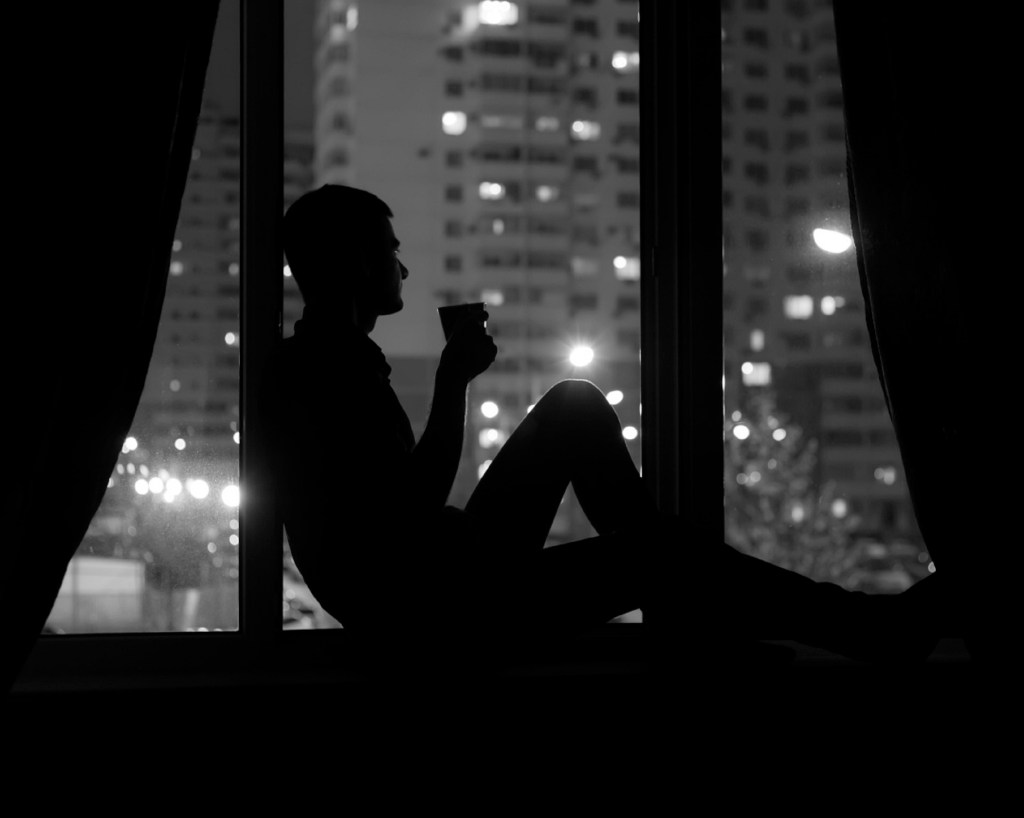
You’ve done a lot of things by yourself since arriving in New York. Moved furniture, sought out good Indian food, shared your feelings. You don’t mind it. Your favorite lyric is Yes, they’re sharing a drink that’s called loneliness, but it’s better than drinking alone from Billy Joel’s “Piano Man.” You’re not sure why you love that line, but you’re alone and love language and drinking, so there’s a logical explanation there.
Dating apps are a way to not be alone. You don’t like them. You don’t like the fact that it takes no liquid courage to swipe at a screen from the comfort of your own bed. You wish you didn’t need the dating apps or the liquid courage to talk to girls, but you do. So, even though you don’t like it, you use them. You’re not sure what you’re looking for on these apps, but you’re certain they won’t provide it. They do, though, find you someone to share a drink that’s called loneliness with, and that’s better than drinking alone. Sometimes you feel bad for misleading a girl who may be looking for something serious when you know ahead of time that it’ll start and end with a drink. You wish you didn’t need to talk to girls to feel better about yourself, but you do. So, even though you don’t like it, you use them.
You’ve been on twelve first dates in your first seven months in NYC. You’ve been on one second date. That’s an average of one-point-seven dates a month with an eight-point-three-repeating success rate. You’re still sober. Your ego, though, only allows you to remember the dates where you were the one to decide you won’t go out again. Sometimes, on Sunday nights, when you’re extra alone, but still not lonely, you lay in your comfortable bed sheets and text girls you haven’t spoken to since your first date. You rarely hear back, and on the rare occasion that you do, it’s already Monday morning, so instead of laying in your bed sheet, you wear it and restore your role as a ghost. At least until next Sunday night.
You took five shots of Gordon’s Gin before a dating app date last week. After three shots you wondered how unhealthy you’re being, but becoming an alcoholic, depressed, self-absorbed, male writer is not a cliché you’re keen on, so you quickly shot the thought down. The date went well and you weren’t sure if it was because she was sweet and you had a lot in common or because of the emotional uplift Gordon provided. She became your first second-date girl. You went on it yesterday, sans-gin, and that one went pretty well, too. You’re not sure why your antagonism for dating apps is so fierce, but it hasn’t wavered, so you texted her saying you had a good time—which you did—but deep down you already know you’ll never see her again. You hope, at least, that you’ll have the balls or the courtesy—two vastly distinct motives—to be upfront about it instead of ghosting her. You doubt that’s going to happen.
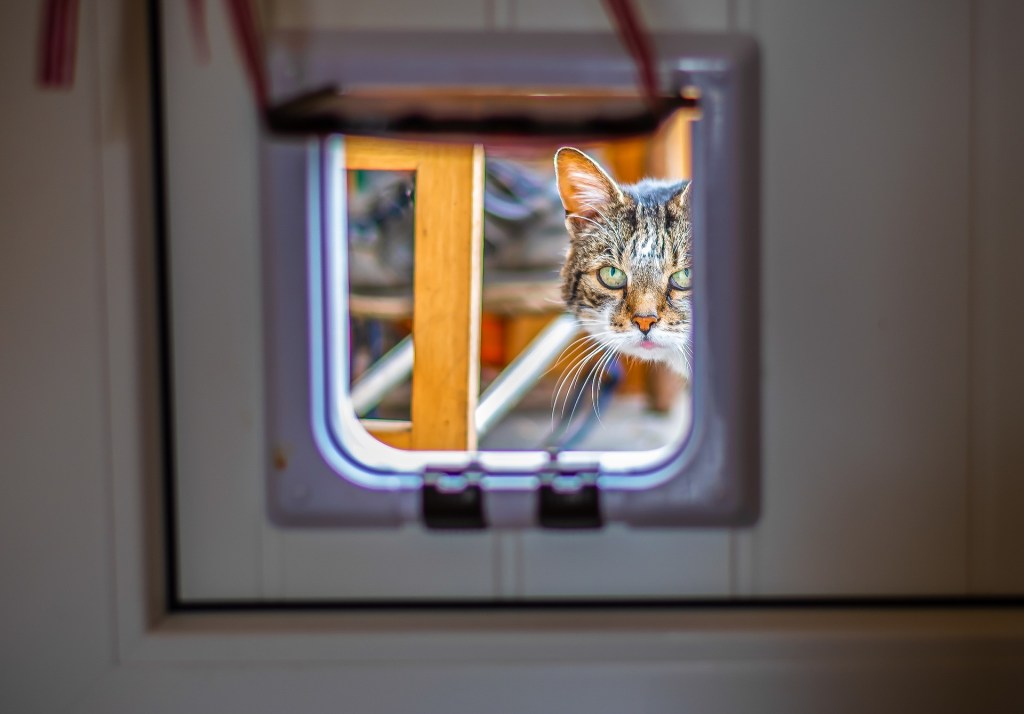
You have one roommate. He has a cat. He—the cat—only comes to you for attention when his owner is absent or occupied. He—the cat—is regal in his black and white coat and overall demeanor, yet you consider him a dick for permanently labeling you his second option. He—your roommate—leaves his door constantly ajar so that Sir Cat can roam freely in and out without his owner having to function as a doorman. This means you hear everything that goes on in the other bedroom, the door for which is perpendicular to yours. You wonder if the installation of a cat flap would solve this problem.
Your apartment is vacant when you and your six Victorias walk in. Your roommate is on a Valentine’s Day date with his long-term girlfriend. You don’t bother placing Victoria in the fridge. You’ll be done with her before she warms up to you. You take the pack to your room and shut the door. The cat meows vigorously outside. It’s annoying, but you enjoy feeling wanted. You get why people play hard to get. You cave, and let the cat into your man cave. The cat plonks on your bed. You could never say no to a pussy that wants you.
You start drinking and typing. You use an old parking ticket as a coaster for your brown beer bottles. You got the fine when you parked your car in front of a school on a weekday. $145. That’s eighteen beers at the bar downstairs with a dollar tip. Or seventy-two beers at the grocery store across the road with a dollar to spare. The confidence you have in the math adding up signifies your blooming drunkenness; the fact the math does in fact add up signifies your lingering sobriety. You take another sip. You’ve since sold the car, but you’ve kept the ticket. It reminds you of a mistake you made. And it makes for a great coaster.
You tried writing sober this morning. Something about men or women or dating or clichés. If there’s a topic you know, it’s definitely men or women or dating or clichés. You ended up with nothing.
You glug through ounces, and write about whatever comes to mind. You ask yourself if you care more about what you write or about being the writer at his desk with six empty brown beer bottles next to his keyboard. You look to your right and see five empty ones next to you. Your answer is one bottle away. You wonder if it always is.
Your apartment door opens. Your roommate and his gf walk in. You don’t know why you type “gf.” You look to your right and find your answer.
The cat hears that your roommate is back. He whines by the door for you to open it. You think of the cat flap. You stand up to let him out, and the sixty-whatever ounces spread through your body at ounce. once. The cat leaves. You hate yourself for being disappointed. You hate him for leading you on. You think of the guy at the bar again. Dicks. You wonder if you’ll have to wait for Sunday night to hear from him again. You sit back down and have your last sip.
You have words on the page and six empty brown bottles next to you. The moment doesn’t feel as cool as it seems in the movies. Maybe because there’s no one here to see you. You’re not lonely, but you wish there was someone here to see this. See you.
Some ounces ago, you decided that you’ll walk downstairs to get a drink at your bar whenever you finish the six-pack. You want to be the guy who finishes a drink at the bar, leaves cash, and walks out without a word. You think this will be a cool image. Plus, there’ll be people there to see it. See you. You envision the guy in this image drinking whiskey. You don’t know much about whiskey. You like having people think you’re The Guy Who Knows Whiskey. You once ordered it at a bar and was stumped when asked what kind you want. You felt the bartender judging you. That’s a mistake you hate remembering but you’re unable to forget. You don’t know any more about whiskey than you did back then, but you may take the risk and order whiskey again. Or maybe you’ll just get another beer. Whatever. You’ll figure it out when you get there. You have bigger problems to deal with at the moment.
You’re out of beer. You’re second guessing going to the bar. Your alcohol confidence is waning. You decide to drink more. Drunkenness and decisiveness go hand-in-hand. You stand up and seventy-something ounces of beer slush through you. You feel them reach the tips of your fingers. No wonder it’s them who end up drunk texting. You realize you haven’t peed yet. You don’t want to break the seal. You may have to. You open the fridge and see a bottle of wine laying cold on its side on the bottom shelf. It’s a cheap red wine you bought for cooking a few weeks ago while making a stew. When your roommate came home that stew-making evening he said, Holy shit, it smells amazing in here. You liked that he said that. When you were cleaning up, he said, When I came home and smelled the food and saw the bottle of wine, I thought you were having a girl over. You didn’t like that he said that.
You grab the bottle by its neck and totter to your room. Your rolling chair spins as you crash into it. Or maybe it’s your head. The cat meows outside. He wants to come in. That must mean your roommate and his gf are occupied. You open the door. The cat runs in. Roommate’s door is open. They are busy. You wish you were busy with someone. Or just with someone. Or just busy. You have to get out of there. You put on your leather jacket. You take the final swig of wine. You place a mint atop your tongue. You make it down through four flights of stairs. You walk to your bar.
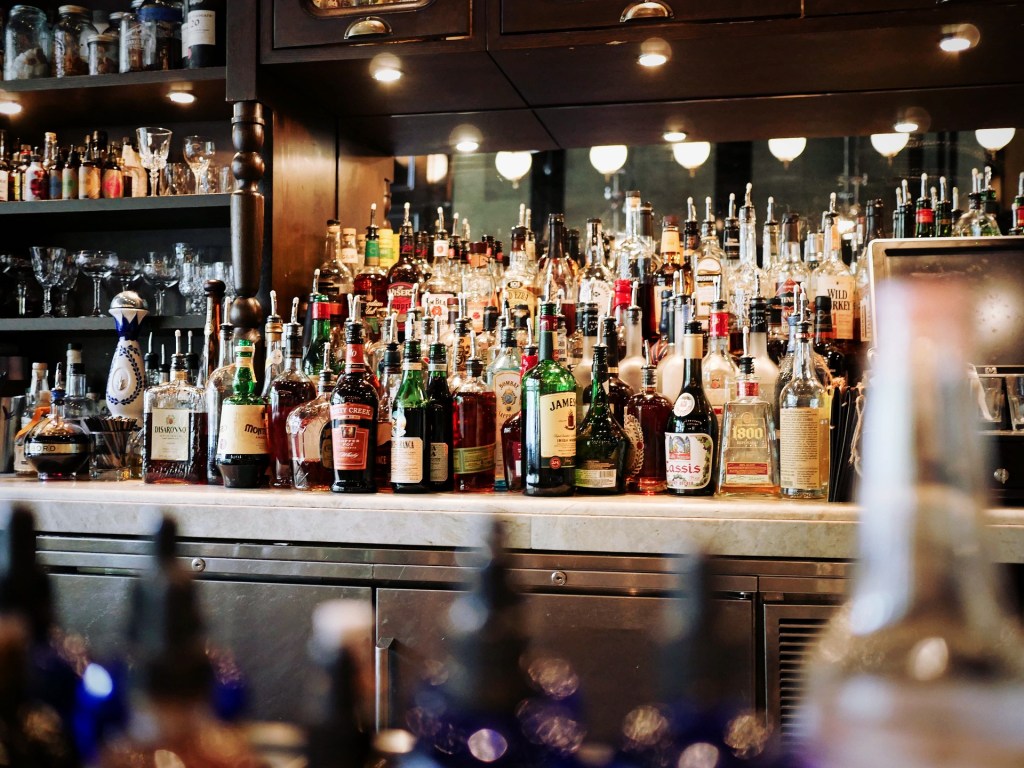
The bar is crowded. There’s an open seat right as you walk in. You ounce. pounce. The bar smells like McDonald’s French fries. If there’s a smell you know and love, it’s the smell of McDonald’s French fries. People keep on opening the door to enter/exit. Every time they do, the outside weather hits you in twenty-nine different degrees. You realize why this seat was open. Installing a flap door definitely wouldn’t be a solution to this problem. Unless people were cat sized. But then the bar would have to be lowered so people could reach their drinks. You don’t want to lower the bar. Even after six beers and half a bottle of wine. A cold gust of wind hits you. You tighten your jacket. The leather squeaks. You order a beer and hope it keeps you warm. And cool.
A man walks in holding takeout food in a bag. He stands next to you and orders a vodka on the rocks. He chugs it while standing up. The bartender tells him he owes ten dollars. The man reaches into his pocket, pulls out crumpled ten- and five-dollar bills, and leaves them both. You wish you could be that cool. He walks out the door. The air hits you.
A couple in their early 30s take his place and ask for a menu. They glance at it, then the woman says, This is fun, which you don’t believe one bit. You assume this is their way of ‘getting out of the house.’ You assume they believe this is what the image of fun is: getting a drink at a hipster bar on a Friday night. You want to tell them that recreating an image will leave them insatiable, but you’re too busy sitting at your bar, by yourself, drinking a beer, wishing you had McDonald’s fries. The couple orders a pair of cocktails. They look happy. It bores you. You sip.
It’s late. You’re tired. You look at your pint and see foam, the residue of something that used to be crisp and sharp and appealing. You chug that, too. A sign tells you there’s a ten dollar minimum for cards. Your beer isn’t enough. You don’t have any cash. You’re glad takeout man came in because you learned the price of a liquor drink, and that’s too much of an investment. Another beer would be cheaper, but would mean another fifteen minutes at the bar, and that’s too much of an investment.
You ask the bartender what his cheapest whiskey is. He says a single malt. You order one on the rocks that costs six dollars. You reach the minimum. You wonder if you’ve reached your limit. The whiskey is good. You wonder if more expensive whiskeys taste better than single malts. Or if they at least make for a better image. You vow that next Valentine’s won’t be a single. You doubt that’s going to happen.
You pay. You walk out the bar. The frigidness sobers you. Sometimes, as you drink, you get the feeling that even an inordinate amount of alcohol won’t inebriate you. As if you reach a threshold where intoxication ceases to be an option, drunkenness an impossibility; where all the liquid does is numb you. As if your brain’s supply of dopamine is depleted, and your parietal lobe, the one that process sensory information, the one that makes you feel, is shut down. As if all the allegedly joyful faux façades your sober self sanguinely sports like a leather jacket squeak away, or, rather, become pestilent in your eyes, your sober self a detestable, naïve fool. That’s how you feel when you stand outside in the cold. Paradoxically, both full of substance and lacking of any.
There’s a commotion permeating through the bar’s glass doors behind you. The kind of joyful ruckus reserved for people and people, not people and books. Every time someone opens the door, the inside ruckus—the one made of laugher and music and the clinking of glasses—hits you. Then the door shuts with the happiness on the other side of the glass. Filtered. You on the outside looking in.
You’ve posed all night but have nothing to show for. An image no one has seen. You decide to take one last shot. There’s a McDonald’s three blocks south. There’s a bed four floors above. There’re twelve unsaved phone numbers a fingertip away. None of the three entice the You you haven’t given up on yet tonight. You stumble back to where you picked up Victoria. You tell the dude at the counter, Marlboro Light, please. You don’t know much about cigarettes, but, unlike whiskey, you can specify an order. You buy a small, purple bic lighter. You amble back to where your block meets your avenue and park under a streetlight. You lean against a still-lit but now closed Dunkin’ Donuts, and smoke.
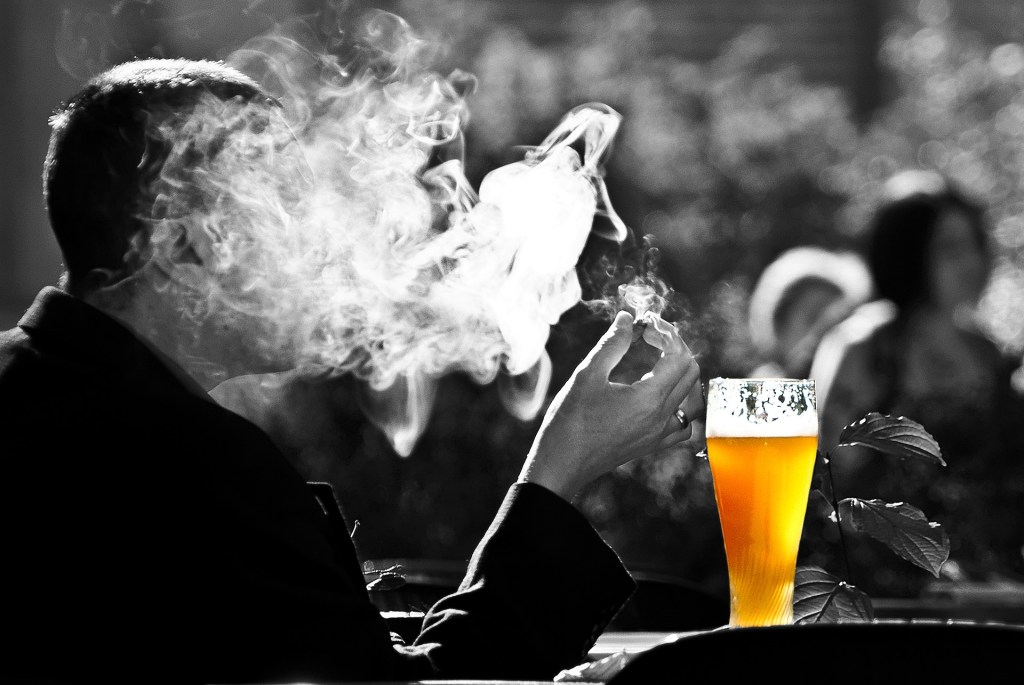
Back when The Cool Kids started smoking in middle school, they handed you one and said you gotta take it to the lungs. You coughed. They laughed. On the rare occasion you’ve confidently and drunkenly accepted a cigarette since, you remembered your lesson. Inhale, swirl the smoke in your mouth for just long enough so it seems like you took it to the lungs, exhale. It’s not about smoking. It’s about being—briefly, disingenuously, illogically—The Guy Who Smokes.
You hear footsteps and laughter approaching the corner. Plural. You stare down at the cigarette. You take a breath. A long one. Long enough for the last of the white to turn orange, then black, then gone. You keep your eyes lowered as your cheek muscles give their final purse, as you reach the filtration zone. You swirl the toxins in your mouth for a moment, fight the urge to have them enter your body, and when the sound of footsteps is near enough so that you’re certain you can be seen, you produce a cloud of smoke. The footsteps, much like you, fade out.
You finish dragging, then drag yourself up the stairs. Your roommate’s door is open. You walk into your room. The cat is on your bed. Your roommate and his gf must still be busy. Or they’re busy for the second time. You shut your door because you don’t want to hear it. You crash onto your bed. The bed, unlike the chair, doesn’t roll, so you’re certain it’s your head that’s spinning now. You stare at the ceiling. The cat rubs his head against your hand. It’s nice. You’re comfortable. The cat jumps off and whines for you to open the door. You get up and do so. The cat runs out. You shut your door. You crash down again. It’s not as comfortable anymore.
If someone looked at you, now, beered and wined and whiskeyed and tobaccoed, they’d tell you that you’re drunk, but you don’t give a fuck what people would think right now. You shut your eyes and finally see yourself, laying cold on your back like a cheap bottle of wine on the bottom shelf. You don’t grab yourself by the neck, but know that if you pass out like this, you may choke on your own vomit. There’s plenty of room for you to roll to your side. You don’t want to choke. You want to move—you really do—but you’re not sure if you can.
Ernie Hemingway once said There is nothing to writing. All you do is sit down at a typewriter and bleed. You want to tell him he should change bleed to drink, but you’re not sure there’s much of a difference.
Valentine’s Day is over. Other people liked the ending. You hated it.
 Eyal Cohen
Leave a comment