I exclusively do my taxes on a double-digit day in April. I’ve done as such every year I’ve filed. Perhaps that will change one day, though I would not bet my (nonexistent) 401K on it. I’ve never felt confident that I’m filing correctly, which, so long as you can’t afford to hire a professional (or parent) to do them for you, I suspect is a relatable sensation. I’m more concerned with the relatability of my opening statement, though.
I want you to think back to Finals Week in college. You run into someone from one of your classes at the library. One of you (doesn’t matter which one, you pick) asks the other (this would be whoever you didn’t pick ten words ago) whether they started working on the final paper or study guide or whatever. The other then responds that they haven’t yet, since, ugh, they also have X, Y, and Z due this week and haven’t even started on those. Person one, then, replies that they can relate, since, ugh, they have to get started on the L, M, and N they have due, which they should’ve done last night but wound up binging a Netflix serial killer show. This interaction happens, give or take, a bajillion times a semester in libraries across the world (except, I’d guess, in China and Germany). I want to say it is a perfectly normal interaction, but I actually don’t think it is. I think it’s just incredibly common. And there’s a difference.
Every student knows every assignment that’s due well in advance, much like I know Tax Day, barring it falling on a weekend or holiday, is April 15th every year. (Except that one Covid year when it got pushed back three months, on which you better believe your boy filed his taxes on July 1_ th . That technically means my opening sentence in this essay is a lie. I could very easily go back up and edit that line, but the sentiment of that first sentence feels true as is, and we all know feelings are more honest than words. I guess I could also just copy this parenthesized digression and paste it right after that first sentence, but I’d rather give you at least two [2] normal paragraphs before I sidetrack us. Though, it should be noted, none of my paragraphs are ever normal. They’re just common.) But despite the fact we know all these due dates in advance, we leave everything for the last second. We could plan ahead; we could get our W-2s and X’s and Y’s and Z’s in order ahead of time, but we don’t. We procrastinate.
It’s probably easier to procrastinate these days than ever before, but I’m not here to talk to you about social media or waning attention spans. I don’t care. I’d be stunned if you don’t check your phone (if you’re on your computer) or switch to a different app (if you’re on your phone) at least seventeen times over the course of this essay. I’m not sure it says much—the fact that I’d be stunned—because I’m surprised anyone reads anything these days that isn’t in the form of a caption or a tweet or a screenshot of a text from the guy your bestie just started dating. I’m even more surprised (‘flabbergasted’ could be a good word to use here at some point) that when people choose to spend some time reading, it’s words that my odd brain has decided to type. Either way, go check your phone, babe. Succumb to the algorithm. Creep your ex’s new boo. Do the NYT Daily Crossword and pretend the 30-59 seconds it took to complete are sufficient intellectual usage of your brain for the day (if it takes you under 30, you’re probably lying; if it’s over 59, you’re probably not reading this because you’re illiterate). So, yeah, go do your thing at any point here. Just make sure you come back to me. It might be worth it.
People say we procrastinate because we’re lazy. I disagree. Sort of. That’s partially true; sometimes we are lazy. But there’s another reason we hold off being productive. I think we love to procrastinate because it enables us, in an almost subconscious but incredibly controlled and predictable manner, to be what we all, on some level, enjoy being: masochistic.
***
If you want to know whether I engage in BDSM stuff, I do knot.
Regardless of whether I do or don’t, my mere mentioning of the word “masochistic” 12 seconds ago immediately elicits connotations of certain sexual behavior. However, much to your disappointment, this essay has relatively little to do with the sexual aspect of this term. Nonetheless, and much like when your sorority puts you in charge of a shrieking, self-absorbed freshman, this little requires some attention.
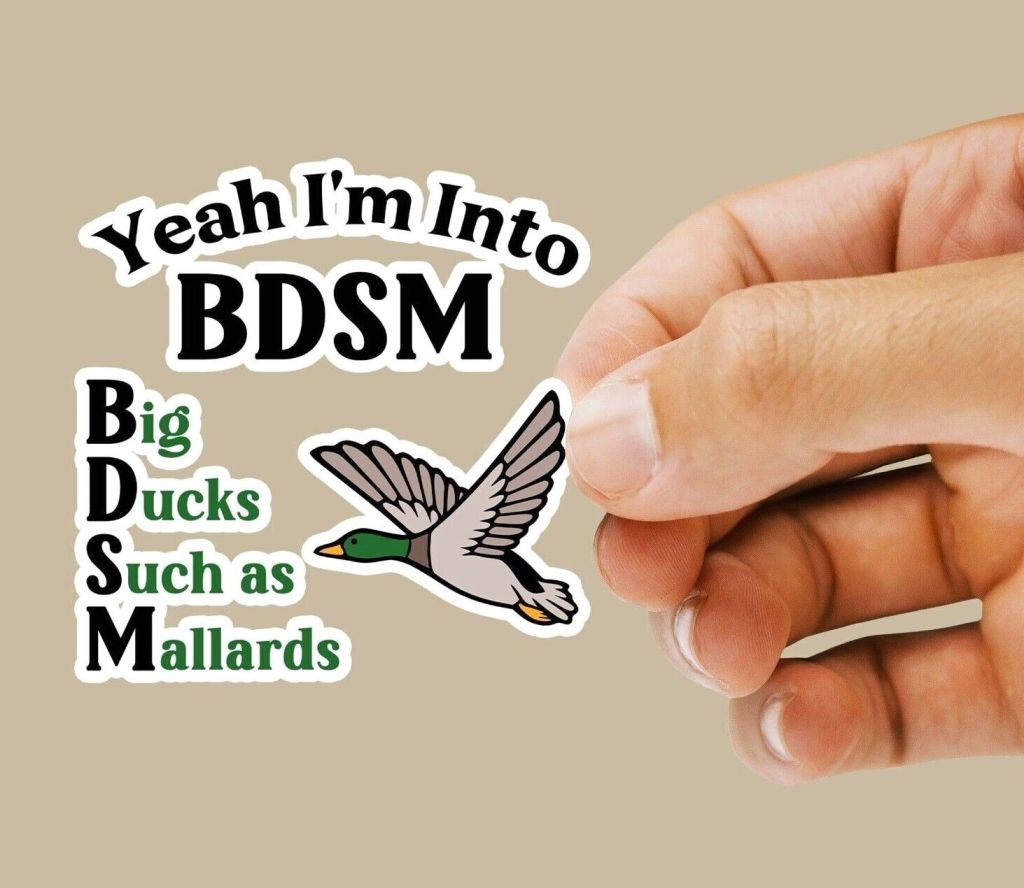
There’s a very high likelihood that my uttering the four letters, BDSM, is sufficient for you to know exactly what this sexual promiscuousness entails. Maybe you’re into this stuff yourself, maybe you’ve watched “50 Shades of Gray,” or maybe Rihanna, in 2010, enlightened you about a world in which sticks and stones may break your bones but chains and whips excite you. We could probably divide the entire world’s population into five (5) groups:
1) People for whom BDSM is a kink and standard component of their sexual lifestyle
2) People who have tried out of curiosity (or, in unfortunate cases, pressure from their partner), and decided it wasn’t for them
3) People who have never tried, are aware this kink exists, and are tempted to try
4) People who have never tried, are aware this kink exists, and have zero interest in trying
5) People who have no idea what BDSM is
Given that you’re using the Internet (a word whose necessary capitalization [unless you’re anti-patriarchy and don’t believe in capitalizing anything] always fascinates me), I am going to presume you fall somewhere between groups 1-4. For the sake of formulating a better understanding of what kind of people comprise each group—and also, it’ll be kinda fun (for me, at least)—I’ll assign each group with the Harry Potter character I believe is most likely to be a part of it. If you’re not familiar with the Harry Potter franchise, or you carry great disdain for J.K. Rowling’s alleged anti-trans stances and aren’t willing to engage with any of her work on any level, you can feel free to skip to the last paragraph of this section. (Weirdly, the fact I’m making fun of her work makes me think you’re even less likely to read this section if you’re anti J.K., since I’m Just Kidding [I hope at least four people {me being one} enjoy that joke.]) I’m going to be assessing these characters based on their movie representation, since the visual aspect plays a crucial part in this assessment (also, I’ve never read the books, though I’d never admit that in public).
Group 1 (those who engage regularly): Honestly, too many to choose from. Immediate instinct told me to go with Luna Lovegood, the natural answer would be Bellatrix Lestrange, but despite the fact you could go make a compelling case for either, I’m going to go with Movie 1’s Professor Quirrell. Don’t even try to argue with me. I know a Sub when I see one. (Not that I’d know.)
Group 2 (those who’ve tried and decided it isn’t for them): This would be Neville Longbottom. Mostly as a derivation of the previous group, as he’d probably get dragged into it by Luna (a cheap joke, but he’d, obviously, be the bottom). Eventually, though, Neville will realize that this lifestyle isn’t for him, and that Luna’s dragging him into a world of bondage and ball gags is a microcosm of their incompatibility, leading to their eventual breakup (if you read some HP fiction online, you’ll learn they don’t stay together). Should be noted, though, that the actor who played Neville, Matthew Lewis, grew to be, against all odds, the subject of many people whose fantasy it is to be ____ by him. Plenty of options for what you can insert in that blank. (Not that I’d know.)
Group 3 (those who are tempted to try): It would be very, very tough to get her to admit she knows what BDSM is, let alone that she’s interested in engaging with it, but this is Dolores Umbridge. Not only is she a repressed, middle-aged woman with a stick up her ass, but there’s also that scene where she literally tortures Harry. I just know that that pompous dominatrix would swap her furry pink for leather black in a heartbeat if it meant she could whip Cornelius into Fudge. (Not that I’d know.)
Group 4 (those who have no interest in trying): Ron Weasley. Ron is in and around the business. He knows what the youth is up to. He ain’t using a woolen sweater to tie nobody up, though. Wool wouldn’t be good material to use to tie someone up, anyway. (Not that I’d know.)
Group 5 (those who don’t know what BDSM is): Dobby.

I mean, come on.
There are a ton of characters in the Harry Potter world, and we could probably spend a whole evening drinking and debating which group each character falls into. You’re more than welcome to bookmark this activity for a themed birthday party idea, or for your next “Oh fuck I’m on a first date and there’s an awkward silence quick what’s a good conversation topic.” I hope you know that I will never—never ever never—turn away any of you who would like to explore this topic with me. Just DM me or text me at 1-800-HPBDSM.
*I must note that I do have one slight objection to my own list above, and that is that the perfect character for Group 5 would not be Dobby, but Harry himself. However, I couldn’t bear giving that whining oblivious prick (Cho didn’t only have the best accent in the movie but she was also mad cute and smart and all up into you dude!!!!) any more attention.*
Lastly (almost), I’d like to say that while nearly every attempt at categorization winds up being somewhat reductive, it must be noted that the consolidation of all the kinky peeps into Group 1 makes that grouping particularly reductive. The level of variance within the BDSM world, the spectrum, the different ways people engage with it all, mandate a far more nuanced distinction. Not, of course, that I would know.
The key here (and welcome back to anyone who scrolled ahead to this section’s closing paragraph, as if this essay is some literary Chutes and Ladders game or one of those “Goosebumps” books where you pick your own narrative), and what my point is, is the one I already made in the opening of this section but that I feel needs reiteration. It’s not, despite the inherent and immediate connotation, about masochism as it pertains to sex. Each one of us, regardless of our Group 1-5 designation, whether we are aware of it or not, have masochistic tendencies. It doesn’t have to be full-blown ‘the only way I can orgasm is if you put a cigarette out on my chest as you tell me I should stop wearing skinny jeans.’ It could be as simple as not doing your final paper until the night before, knowing the level of emotional distress that postponement and procrastination will bring into your life. Maybe it’s not a self-infliction of pain, but just different forms of self-sabotage. It’s not the ‘sabotage’ part, though, that I care about. It’s the ‘self.’
There’s something we love about the pain we get to control.
***
I won’t bore you with the details, but a girl broke my heart.
In all fairness, that’s not true. She didn’t break it. Not literally, nor metaphorically. But that’s just the easiest way for me to paint the picture of what that girl did without me having to get into any of the specifics. I know you know exactly what I mean when I use that cliché, and that’s sufficient for us here. The only detail I will give you is that this was a while ago. I realize that this is a very vague way to describe time, but when I say while I mean long enough for me to have been able to move on from the pain. Yet, I haven’t. And that’s why I’m thinking about spoons.
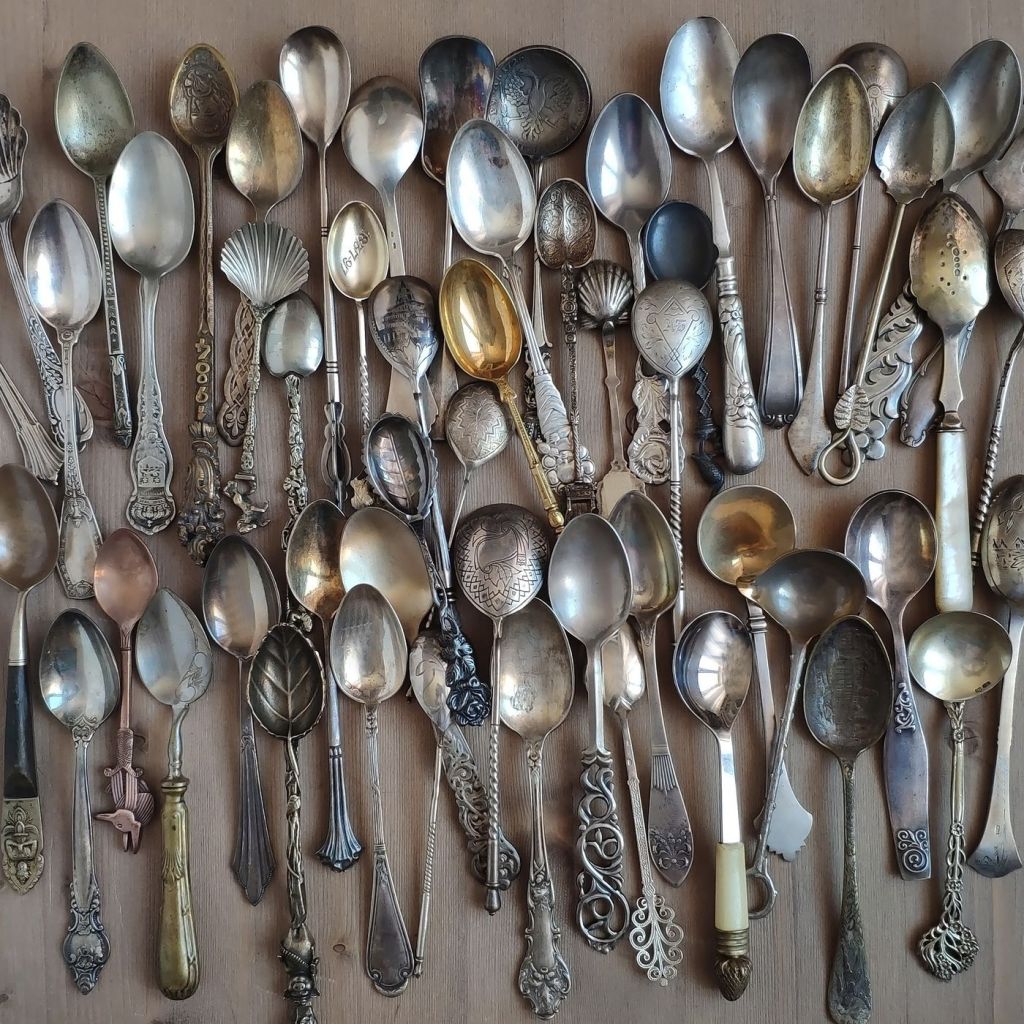
I love spoons. Like, a lot. Like, I feel about spoons the way humans are supposed to feel about family or oxygen or their phone or multi-ply toilet paper: they are something I cannot live without. In typical male fashion, the collection of spoons I own is a smattering eclectic mismatching set from different periods of my life. I still possess spoons I stole from my undergrad’s cafeteria my sophomore year, as well as spoons that could have originally belonged to any of my roommates between then (2015) and now (2023). This is important. It is important because that means I have a variety of spoons, which enables me to have the optimal scooping utensil for the specific task at hand.
I have one spoon that I only use for entrées. It’s heavy, sturdy, and has a large, thick bowl. I use it for my main courses, as it enables me to take massive scoops of carb + protein + greens, since I prefer eating my food in the largest humanly bites possible. Perhaps not ‘humanly,’ actually, but more so animalistic, like a little hamster with puffy cheeks or a squirrel with a whole nut in its mouth. Except I’m different from those animals: I’m hairier, not as cute, and far more likely to have promiscuous thoughts when hearing the phrase ‘nut in mouth.’
I have two spoons I exclusively use to consume Ben & Jerry’s. They are both rather worn and used, which makes them feel more homely (British version of the word) and wholesome, which is the vibe I seek out as I dive into a pint of Phish Food. The spoons are smooth, evenly thick, and are slightly longer than the length of one (1) B&J’s pint, rendering them perfect for the purpose of carving out delicious ice cream that may still be frozen and firm, and also may be firmly against Israeli occupation beyond the Green Line, which—despite the fact I agree with the stance—is just wildly odd to think about when we take into account the fact that this is an ice cream brand. Though I guess it’s also perfectly emblematic of the discursive age we live in, in which brands are expected to be active and vocal on social justice issues, even if they’re a company primarily centered around causing people (mostly Ashkenazi Jewish women but not only) bowel distress. (I also have a ton of Ben & Jerry’s jokes here.)
I have two spoons I use to eat my chopped salad. They are of standard length, and, frankly, look like the spoon you get assigned when your family is hosting a dinner party and for some reason the “We’re having people over get the nice utensil set out” is one spoon short, so you, being the least important member of the family, get this rudimentary spoon instead. Both of these spoons are, precisely, that spoon. I love them both so much. On some level, I think I am these spoons. Anyway. Their bowl has sharp edges, which makes them very effective in scraping tahini (which I always have with my salad) off the ceramic bowl I have my salad in.
That’s it. There are others I use for other varying purposes, but those are the five most important spoons in my life. Obviously, the spoons are heavily correlated to my preference of bowls over plates, and while I do love bowls, I feel far more intensely about my spoons than I do about my bowls (I have two really great anecdotes about two of my bowls but I’ve already digressed far too much in this section; call 1-800-LOVEABOWL [reads as ‘lovable’] if you want to hear them). Also obviously, I spend too much time thinking about my kitchen utensils. I think about my spoons far more frequently than I think about any human being in this world.
Except, of course, that girl.
***
Michel Foucault, the French Philosopher, made his way to San Francisco in the latter parts of his life and immersed himself into the homosexual BDSM scene. That—and inadequate healthcare at the time—was what eventually ended his life, as he contracted and died of AIDS in 1984. His writing and work in those days, which he was never able to finish, revolved around the liberation people can find from engaging in sadomasochistic activity. In Foucault’s earlier work (academic, not sexual), he discussed religion’s role in shaping the self, and in particular, asceticism: purposefully restricting yourself, even at the cost of pain, for a greater purpose. Asceticism, Foucault (and many others) had argued before, was how religion directed people towards salvation.
I’m no Foucault expert, nor did I properly research the writing he was doing in the days he was also hanging out in sex dungeons under the Golden Gate Bridge (perhaps literally). But the basic idea around this is one we’re all familiar with. Religion offers people with institutional, spiritual, and seemingly logical reasons to purposefully pain themselves. That reason is labeled as salvation, redemption, or, simply, a better life. Think: fasting on Ramadan or Yom Kippur, giving up stuff for Lent, Tibetan self-immolation, etc. People deprive or hurt themselves intentionally, believing this will benefit them in the long run and in the grand scheme of things. The suffering is undergone for a greater good or a better self.
Foucault’s dungeon days’ argument was that BDSM allows humans to go through this ascetic process in a non-institutional, individual way. It allows people to unshackle themselves from some form of burden by, ironically, shackling themselves to a sex post (I’m not sure ‘sex post’ is a thing, but A: I’m writing this line in public and am not trying to google the term with my laptop screen in plain sight, and B: I don’t want to google the term in fear of getting targeted ads for prostitution by mail [I’d be happy if two people {me being one} enjoy that joke]). Importantly, the promiscuous form of asceticism Foucault talked about, this nearing towards salvation, is not mandated by a divine entity or your local religious authority. (I will not, under any circumstances, make any priest / rabbi who’s into BDSM stuff at any point this section. I already have an essay about religious pedophilia [not actually] in which I touch on the subject. Figuratively. You can find it here.) The whole point, Mich argued, is to push submissiveness to a point where you gain total control—not control over the pain, but over your human experience.
Now, listen. Let’s say heaven exists (which I don’t believe is true), and let’s say I’m pure enough to gain admission (which I don’t believe is true), but in order to confirm my ticket I have to do one of two (2) things.
(1) Not eat and drink for X amount of time.
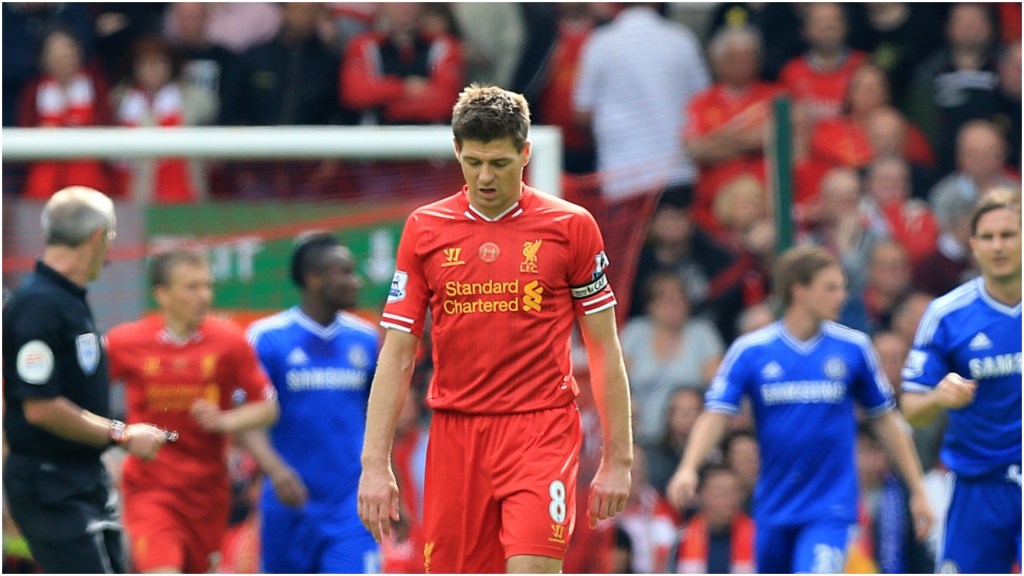
(2) Be muzzled by a red ball gag with a leather strap while I’m chained to a huge wooden sex post in the shape of an X like Ramsay did to Theon in “Game of Thrones,” as two Eastern European women who are wearing Steven Gerrard jerseys whip me (one of them donning the home shirt from the 04/05 season, the other in the 09/10 away one), while at the same time a third woman scoops scalding hot Olive Garden chicken gnocchi soup into my mouth until I climax (she’d be wearing the 13/14 Gerrard home jersey, which, if you know anything about Stevie’s career, Premier League lore, or who I am as a human being, you’d know that this jersey signifies—far and away—the largest level of emotional, physical, and mental pain I’ve ever experienced [except, of course, that girl]).
So, if those are my two options, I’m 100% picking the ____.
(Word bank: former, latter)
Maybe I’m unsalvageable. Maybe I’ve made too many molesting priest jokes to earn a spot in heaven. If you’re reading this, and are a deeply religious person, you’ll probably say there’s no such thing, as no one is beyond salvation. It is never too late to join His path. Then again, if you are a deeply religious person, there’s no way in hell you’re reading this. Pun intended.
I don’t know if I’m salvageable or not. What I do know is that I have no particular interest in salvation or going to heaven in its religious sense, but heaven as it can exist in the world we’re in (I assume Michel’s heaven was somewhere in NoCal with a man named Gaston). There’s an argument to be made that I’m conflating salvation with happiness in this section. That’s intentional. BDSM peeps do BDSM stuff not because they’re hoping The Lord will allow them through His pearly gates, but because it makes them feel good. It makes them feel pleasure. It makes them feel—despite the fact it, at times, entails being afflicted with substantial doses of pain—happy. And that’s my point.
It’s not that we necessarily want to feel the pain, the tough times, the struggle, the stress and distress. Yet, often, we find ourselves actively pursuing these things. We’ve grown to believe that existence within those things is a necessary step on our path towards whatever is on the other side of them—the joy, the salvation, the thing we actually want. It’s almost as if we’re Pavlovian dogs, where we’ve been conditioned to think that struggling through life is the bell and accomplishing our goals is the food. Even when the food isn’t there waiting for us, we still believe that the bell signifies its arrival; even when we’re not heading in the right direction, we believe the struggle is an encouraging signpost. Thus (great essay word that signifies you’re about to hear a high school English student drop some thesis bars), pain has become both normalized and romanticized. People tend to stay in ‘painful’ situations because they’re pursuing something—a job, a relationship, a better life—and they believe that pain is a part of the process. And yes, sometimes that’s true, but also sometimes, it isn’t. We’ve lost some of our ability to logically assess pain; to recognize which of our struggles are worth all the tough times and can one day lead to joy, and which are bound to remain a struggle.
Maybe that’s what life is. Trying to figure out what’s worth the pain, and what isn’t.
***
This essay took a long time to write. Like, a Long time. I imagine it’s also been painfully long to read, but maybe it’s somehow been worth it. I hope it was. Feel free to let me know. Either way, I promise, we’re almost done.
It took forever to write mostly because I had no idea what my point was. Evidently, I still don’t, but I’d rather have Dolores Umbridge put out cigarettes in both my eyes than have to stare at this thing a second longer. In an attempt to figure out what I want to say, I talked about these ideas with a good friend of mine. I bring her up now for three (3) reasons:
1) We disagreed about so much of this that our arguments were integral to me reaching any sort of formulated point.
2) She made one key point that pissed me off and that I will bring up in a second. By trying to argue against it, I figured out what is the closest thing I have to a high school essay thesis statement about all this.
3) She’s mad that she’s not mentioned in the book I wrote (which I’m still trying to sell and which you can learn more about here), so maybe having you referenced here, Sophia, will get you off my fucking back.
Her point—vaguely, I’m doing this off memory and without an exact transcript of our conversation—was that what I’m actually talking about isn’t pain, but passivity. The feeling I’m actually describing here stems from inaction—like allowing a deadline to approach, for example. From understanding you’re in a situation that isn’t conducive for you, and not doing anything to change the circumstances. She’s right, but at the same time, she’s wrong. Her and I see the world in different ways (which, and I mean this affectionately, is the best thing she contributes to my life). A choice to be passive, in my mind, is an action in and of itself.
There is an incredibly important conversation to have here, about the seemingly inherent gendered bias people can have about all of this. How women have been historically conditioned towards a passivity that harms them, whereas men are ingrained to be active pursuers along with all the expectations that come with that, no matter the toll it may take on them. How when women are “active,” it’s perceived as this “aggressive” attempt to shatter some glass ceiling, whereas men’s passivity is seen as a choice to watch a world that was built for them continue to roll in the same way. I recognize that this is an argument that’s worth unpacking, and, trust me, I’d love to have it with you, but it is a can of worms that is incredibly separate from the one we’re unpacking here. I’ll get to it one day.
The problem with pain’s existence in our everyday lives—much like the feedback I’d get about my usage of the word throughout here if I ever submitted this essay to a workshop—is that it’s used as a broad-brush. Such a broad and vague concept mandates a level of nuance and subtlety, which is why when we want to talk about the kind of pain we’re going through, I have to be more specific.
This essay has to do with three (3) types of pain:
First, there’s the controlled, limited pain we actively risk by choosing to be passive. Procrastination (when it isn’t just you being lazy or having other stuff to do) is an example. I would argue that procrastinating can gratify us, actually, since it pleases us in a very specific way. We know—deep down—how long a final paper will take us to get done, because—deep down—we know our capabilities. So, we put ourselves through the stress of having an assignment hanging over our head, hold out until the last minute, thrive under the pressure, knock it out, and make all that prolonged stress feel worth it because we’ve arrived at that mini salvation. We gain the reward of an affirmation of our abilities, which, over time, makes us appreciate and even love the stress that preceded it all. Procrastination is an example of a pain that we control, while at the same time, a pain that is limited. There’s only so much a late assignment submission can do to you.
Second, there’s the limitless pain people don’t risk, but actively choose. BDSM, for example. I would argue that BDSM makes people (Subs, specifically [not, of course, that I would know]) feel comfortable, because they’re choosing pain. The difference from the first kind is that the pleasure is gained from not knowing how much pain will be inflicted. The rush, the thrill, the pleasure, comes from choosing to be dragged towards a pain, then salvation, then gratification, not being able to control anything about the route.
Third, there’s the limitless pain we don’t choose, and can’t control, but do actively risk. Falling in love, for example.
I fell in love once. I know I should say more, but this is just the easiest way for me to paint the picture of how I felt without having to get into any of the specifics. I know you know exactly what I mean when I use that cliché, and that’s sufficient for us here. The only detail I will give you is that this was a while ago. I realize that this is a very vague way to describe time, but when I say while I mean long enough for me to have been able to move on from the pain.
Yet, I haven’t. And that’s why I’m thinking about spoons.
***
I live with a couple. About a year ago, they purchased a new set of utensils for our home (I use the phrase ‘our home’ loosely). It’s a proper, adult set. When they bought it, they told me to go through the drawer and stow away any utensils I may wish to take with me whenever I move out. Sounds good, I said, trying to remember when we agreed that I’ll be the one that’s going to move out. I’d lived with this couple for a while by then, and by while I mean long enough for me to know their procrastinating habits, meaning I knew the changing of the cutlery guard wouldn’t happen any time soon.
Then, one day, about six months ago, it happened. They stowed all the old utensils in a box in the kitchen, and unveiled the flashy new set. The new set is good. The forks are a smidgen too short for my liking, but the knives have heavy and sturdy handles, which is great. The only real problem is that the set only includes teaspoons. I find that to be incredibly odd on behalf of both the manufacturing company and my roommates who decided to purchase a set that didn’t include tablespoons, but that’s beside the point.
When I first opened the drawer and saw that we only had teeny little baby spoons (which, it should be noted, have their own merit and purpose), I was perplexed for about 0.3 seconds, then simply shrugged. I took three steps to where the old utensils box was, extracted my five trusted friends, and placed them back in the drawer. Equilibrium.
Fast forward a week, none of my spoons were in the drawer. I handle roughly 99.8% of the dish washing and stowing in the household, so this struck me as odd. Suspicious, I went to the box of old utensils, found my spoons, and hummed a Hm to myself as I moved them back.
Another week went by, the spoon friends nowhere to be seen again. A madder (and more guttural) Hm emitted from the depths of my Middle Eastern throat as I tossed my spoons back into the utensil holder, the metal clanking with the plastic.
It should be noted, here, that my roommates and I aren’t particularly close. There’s no animosity at all (outside of this spoon thing), nor is there grand affection. It’s just more of a business relationship. It should be more importantly noted that I am a man and I do not engage with confrontation or direct communication for the purpose of conflict resolution.
This happened twice more, then, one day, I finished a long string of Zoom work calls after 9 PM, exhausted, but, more importantly, hangry. (My college roommate once told me, my sophomore year, as I was low on blood-sugar levels and he was taking his sweet fucking time putting his shoes on before we left for dinner, that I’m not allowed to be hangry because that’s something that only women do. My possession of testicles and the fact my undeniable desire to punch him in his fucking face was abated by a burrito line, though, begged to differ.) So, hangry as hell, I opened the drawer, then immediately slammed it shut with a level of force reserved for hydraulic presses, accompanied by anywhere between 1-57 variations of the word fuck shrieked out of the phlegm-machine that is my throat.
Fortunately, my roommates weren’t home at that moment. I’d actually be very curious to know how I would’ve reacted had they been home. I presume—quite confidently—that I would’ve been able to swallow my anger. But this isn’t an essay about my super human ability to suppress my emotions. (Actually, instead of an essay, I could frame this as a comic book titled, The Adventures of Bottled Up Bro, where the superhero turns into an Aquafina bottle anytime someone asks him how he’s feeling. We’ll leave this for another day. Anyhow.) I proceeded to restore my spoons into the drawer, punctuating each clank of the metal into the plastic utensil holder with a Hebrew cuss word (my level of rage can be assessed on a scale of what language I swear in. In ascending order: English, Hebrew, Arabic, Indiscernible Grumbles).
I know what you want to say. I could have resolved this stupid and illogical debacle with a casual text or offhanded comment to my roommates, and prevented the hits of rage that followed. But as this was going on, I understood something, and I feel like by this point in the essay, maybe you understand it too. I didn’t tell my roommates something like ‘Hey, I’m using these spoons,’ because, somewhere, deep down, I wanted the spoons to be gone. I almost hoped they’d be gone. I knew precisely how aggravated and annoyed and pissed the fuck off it would make me if my roommates moved the spoons, and that’s exactly why I was comfortable with that happening. But what made my acceptance—welcoming, inviting even—of this anger make even more sense to me was one simple fact: There was no real risk. The remedy was never more than three steps away.
***
As of my writing these words, the spoons are in the drawer. Hang on. Let me go check. Yes, three are in the drawer and two are drying in the dish rack (last night’s dinner’s and dessert’s vessels). I think my roommates have understood the situation.
I guess there’s an argument that could be made that my roommates were trying to do me a favor. That it’s time to grow up and move on. That sometimes we need to let go of things, no matter how much they mean to us or how much we love them. That we have to love with a risk—a real risk—that that love may be taken away. Not three steps away, but, just, away. That would be a fair argument to make, and maybe if I repeat those words enough times, I’ll even believe them myself. I doubt it, though, since, as we all know, feelings are more honest than words.
And I feel like she’s a spoon I loved, and I lost, and I can’t simply go get back, and that’s leaving me with a pain that’s become both incredibly common and increasingly normal. I’m choosing to stay in this pain, to believe that the suffering is being done for a greater good or a better self, believe that this is just a necessary step in my path towards whatever is on the other side of it—my own, personal, happy little salvation. And as I wait here, and what I think I’ve figured out, is that I’ve grown to love this pain that I’m in. Not because I want to love it, but because my only option is to conflate her absence with her presence. She’s gone, so I can’t love her, but I do, so I’m left to love whatever is left behind: A man, in pain, desperate for a remedy. A spoonful of it.

 Eyal Cohen
Leave a comment